
Tanzania eSIM Guide: Stay Connected from Serengeti to Zanzibar (Real Test)
The dust cloud from a Land Cruiser ahead of you, a herd of elephants crossing the trail 20 meters away, a baby wobbling after its mother. You fumble for your phone. You hit record. And then… nothing. No signal. No upload. No way to share the wildest thing you’ve ever witnessed.
That’s exactly the situation we wanted to avoid when our SimpleSIM team packed up for Tanzania last month. We flew out with a mission: test eSIM coverage from the savannas of Tarangire to the white-sand beaches of Zanzibar, and report back honestly.
Here’s what happened.
Why Tanzania Demands Connectivity (More Than You’d Think)
Tanzania isn’t your typical “lie on the beach and disconnect” destination. Sure, Zanzibar has that vibe. But most trips combine two very different worlds — bush safari and Indian Ocean coast — and both require reliable data for reasons you don’t always think about until you’re stuck.
During safari:
- Your guide might speak limited English (or French). Google Translate on your phone becomes your co-pilot.
- Offline maps are fine until you realize your lodge isn’t on them. Google Maps with live 4G data? Different story.
- You’ll want to share photos and videos with family in real-time. Sunsets over the Serengeti lose their impact when you post them three days late from a hotel lobby.
- WhatsApp is essential for coordinating with drivers, lodges, and local contacts. SMS barely exists here.
On the coast:
- Uber doesn’t operate in Zanzibar, but local taxi apps (like ZanTaxi) do — and they need data.
- Booking a spice tour, a dhow trip, or a snorkeling excursion often happens through WhatsApp with a local operator.
- Restaurant recommendations, tidal maps for Paje beach, checking the ferry to Stone Town — all of it runs on data.
Bottom line: offline mode won’t cut it in Tanzania.
Field Report: “It Works Here Too”
We activated our SimpleSIM Tanzania eSIM profiles at Charles de Gaulle before boarding. Total setup time: about 90 seconds per phone. Once we landed at Kilimanjaro Airport and toggled off airplane mode, the connection kicked in within 30 seconds. No paperwork, no kiosk, no local currency needed.
Here’s our coverage verdict, place by place.
Tarangire National Park
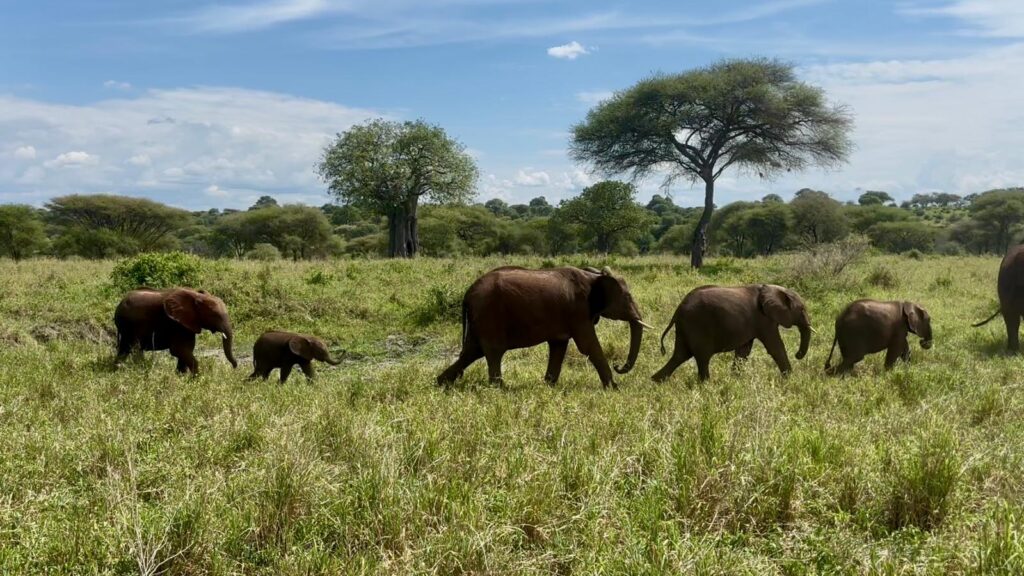
Tarangire is elephant country. It’s less crowded than the Serengeti (which we liked), and in February — green season — the landscape is unbelievably lush. Think bright grass plains, massive baobab trees, and herds everywhere.
Coverage: Solid 4G along the main circuit. We streamed a family of elephants live on a video call for over four minutes without a single drop. Near the Tarangire River, signal dipped to 3G for a stretch, but was still enough to send photos and messages. Deep inside the park (off-trail areas), expect some dead zones — but that’s true for any provider.
Verdict: 8/10. Reliable where it counts.
Serengeti National Park
The big one. Endless plains, the occasional acacia tree, and that unmistakable feeling of being in the middle of something enormous. We spent two nights at a tented camp in central Serengeti.
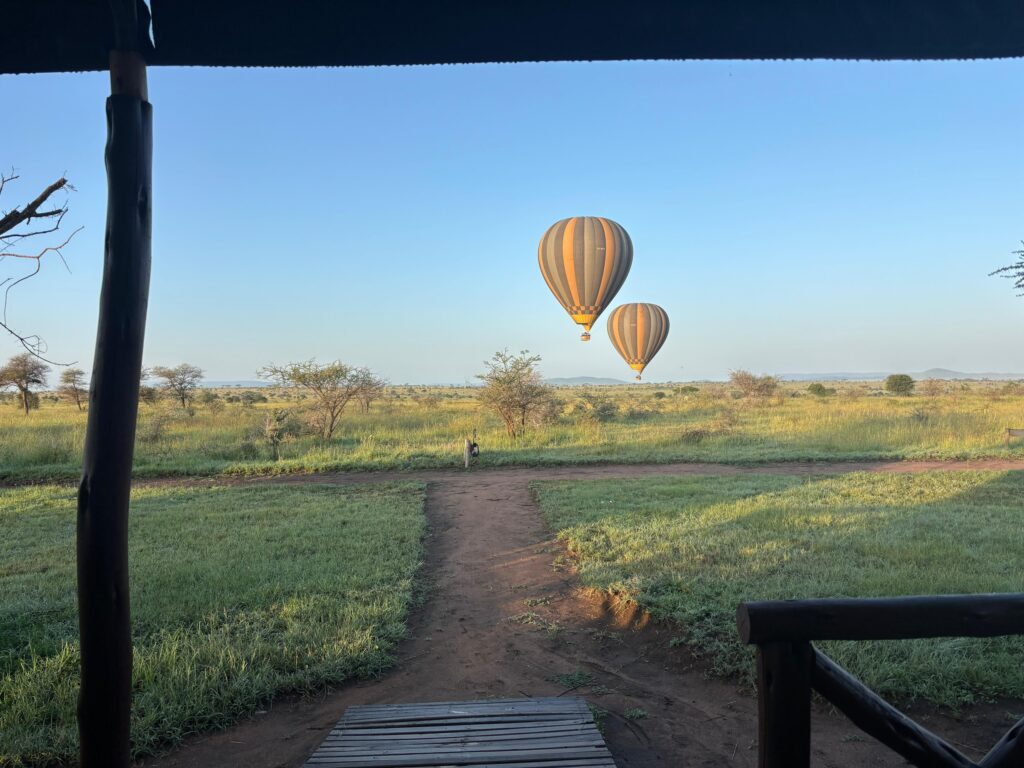
Waking up at 6 AM to see hot air balloons rising over the savanna from the deck of our tent — that alone was worth the trip. And yes, we uploaded those photos immediately.
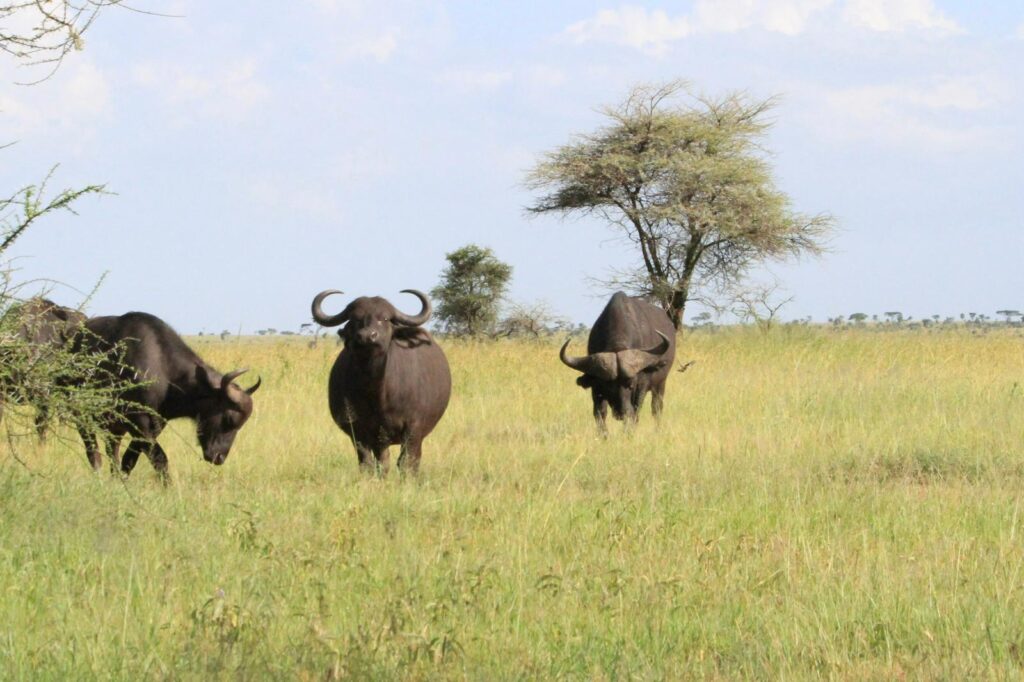
Coverage: Surprisingly good in the central Serengeti corridor (Seronera area). 4G most of the time. We lost signal during a game drive in the western corridor, but it came back within 15 minutes. The biggest test was sharing a 45-second video of a buffalo standoff — three massive Cape buffalo just staring us down, 10 meters from the vehicle. Uploaded in about 40 seconds on 4G.
Verdict: 7/10. Good in the main areas, spotty in remote sectors (expected).
Zanzibar
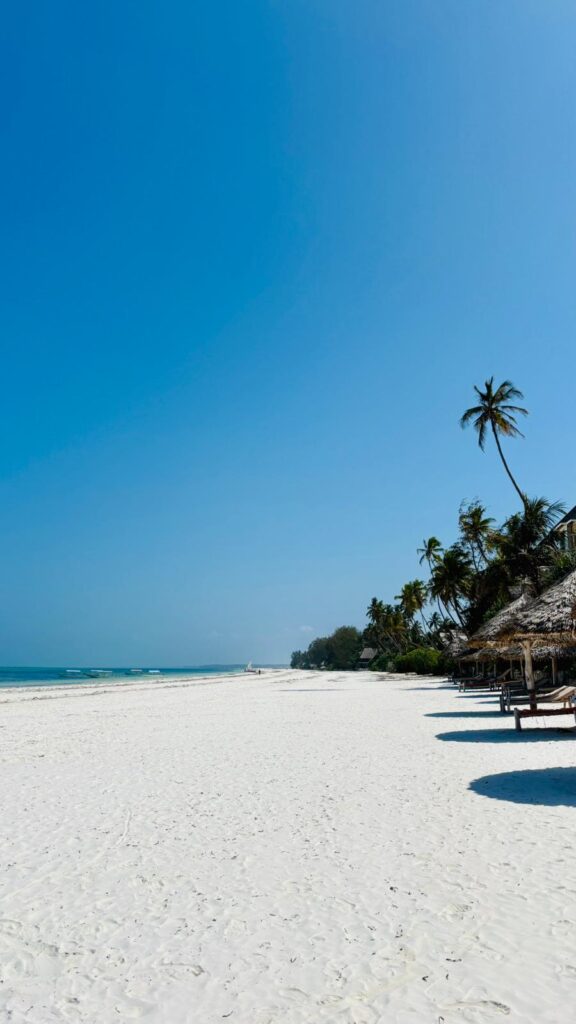
After four days of dust and early mornings, Zanzibar felt like landing on a different planet. White sand you could mistake for snow (if it weren’t 32°C), turquoise water, palm trees casting long afternoon shadows over thatched beach shelters. Zero stress.
Coverage: Full 4G everywhere we tested — Stone Town, Nungwi, Kendwa, Paje. Even on the boat transfer between islands, we had signal for most of the ride. Zanzibar is well-connected.
Verdict: 9/10. No complaints.
eSIM vs. Your Other Options in Tanzania
We’ve been asked this a lot: “Why not just buy a local SIM at the airport?” Fair question. Here’s the honest breakdown.
| eSIM (SimpleSIM) | Local SIM (Airtel/Vodacom) | Roaming (Home Carrier) | |
|---|---|---|---|
| Setup time | 90 seconds before departure | 20-45 min at airport kiosk | None, but unexpected bills |
| Price (10GB/30 days) | €32.99 flat | ~$10-15 + time and hassle | €50-150+ depending on carrier |
| Keep your number | Yes (dual SIM) | No, new number | Yes |
| Hotspot sharing | Yes | Often blocked | Often blocked or extra fee |
| Works at landing | Immediately | After registration | Yes, at roaming rates |
| Risk | None | ID registration sometimes fails | Bill shock |
The local SIM is cheaper if you’re counting euros. But factor in the 30-minute queue at Kilimanjaro Airport after an 8-hour flight, the ID registration process (which sometimes fails for tourists), and losing your WhatsApp number — and the math changes fast.
Roaming? Just don’t. We’ve heard stories of travelers paying €80+ for a week of light data usage in Tanzania through their French carrier. An eSIM at €21.99 for 5GB eliminates that risk completely.
How to Set Up Your eSIM for Tanzania
Four steps. Seriously.
- Choose your plan on our Tanzania page — 5GB (€21.99) or 10GB (€32.99), both valid 30 days.
- Receive your QR code by email instantly after purchase.
- Scan the QR code on your iPhone or Android (ideally at home, before your flight — the install doesn’t require data).
- Land in Tanzania, turn off airplane mode, make sure “Data Roaming” is enabled for the eSIM line — and you’re online.
Two pro tips from the field:
- If you’re traveling as a couple or family, the 10GB plan with hotspot sharing is a smart move. We had three phones running off one eSIM during a game drive.
- Install the eSIM before leaving. We cannot stress this enough. Airport Wi-Fi in Kilimanjaro is… let’s say “unreliable.”
When to Go: The February Argument
Most people think of Tanzania as a June-October destination (dry season, Great Migration). They’re not wrong. But February has its own magic.
Green season perks:
- Prices drop 20-40% on lodges and flights compared to peak season
- Fewer vehicles on safari — you might have a sighting completely to yourself
- The landscape is lush and photogenic instead of dry and dusty
- February is calving season in the southern Serengeti — baby wildebeest, zebras, and gazelles everywhere
- Zanzibar weather is at its best: hot, sunny, low humidity
If your school holiday calendar has a February slot open (and right now, all three French school zones fall between February 7 and March 9, 2026), Tanzania is nine hours and one direct flight from Paris.
Conclusion
Tanzania is one of those trips that stays with you. The Serengeti silence at dawn. The absurd beauty of a Zanzibar beach. A baby elephant stumbling after its family.
Don’t let a connectivity problem get in the way of living it fully. With an eSIM, you book, share, navigate, and stay safe — without hunting for Wi-Fi or dreading your phone bill.
Ready to go? 👉 Check out our eSIM plans for Tanzania starting at €21.99
And when you’re standing on that Serengeti plain at sunrise, phone in hand, perfect 4G signal on your screen — remember: ici aussi, ça capte.